

Dental Crowns & Bridges in Kolkata
Home > Treatments > Prosthodontics > Crowns & Bridges

26
Years of Excellence

NABH
Accredited

60+
Dental Professionals

12K+
Happy Patients

50+
Dental Treatments
Prosthodontics
Crowns & Bridges
Dentures
Flexible Dentures
Full Mouth Reconstruction
6292109993
What are Crowns & Bridges?
Crowns and bridges are dental restorations designed to restore the function and appearance of damaged or missing teeth. Crowns cover a damaged tooth, while bridges fill gaps left by missing teeth, offering durable, natural-looking solutions.
Looking to turn your smile into a showstopper? With crowns and bridges from Smile & Profile, your teeth will be as strong as your confidence. Get started now—schedule your appointment and let’s craft the perfect smile!
Our Clinic Locations
Got Gaps in Your Smile? Discover If Crowns & Bridges Are Your Perfect Fit with Our Fun Quiz
How do Crowns & Bridges Work?
Crowns and bridges work by covering damaged teeth or filling in gaps, restoring both functionality and appearance. The crowns are placed over the existing tooth, while bridges use nearby teeth or implants for support.
- Crowns are secured over damaged or decayed teeth to restore shape and strength
- Bridges fill gaps caused by missing teeth, anchored by crowns on adjacent teeth
- Both solutions are designed to blend seamlessly with your natural teeth
- They help improve chewing, speaking, and overall oral function
- The procedure is minimally invasive and ensures long-lasting results
Types of Crowns & Bridges
Types of Crowns
Porcelain Crowns
- Natural-looking and blend seamlessly with surrounding teeth
- Ideal for front teeth due to their aesthetic appeal
- Prone to wear over time compared to metal crowns
Metal Crowns
- Extremely durable and resistant to wear
- Typically used for back teeth, where appearance is less of a concern
- Require less tooth structure removal compared to other types
Porcelain-Fused-to-Metal Crowns
- Offer a good balance of strength and aesthetics
- Provide a more natural look than metal crowns, especially for visible teeth
- Can show a dark line near the gum line over time
Zirconia Crowns
- Highly durable and resistant to chipping or cracking
- Ideal for patients with heavy biting forces
- Natural appearance and blends well with natural teeth
Resin Crowns
- Less expensive than other types
- Less durable and may wear down over time
- Suitable for temporary use or less critical areas
Conventional Biopsy
- Small tissue sample is removed from suspicious area
- Examined under a microscope for confirmation
- Considered the gold standard for diagnosis
- Done when other screenings show abnormal findings
Types of Bridges
Traditional Bridges
- The most common type is using crowns on adjacent teeth to anchor the bridge
- Ideal for replacing a single missing tooth
- Requires healthy adjacent teeth for support
Cantilever Bridges
- Supported by only one adjacent tooth, used when there's no tooth on one side of the gap
- Ideal for smaller gaps, typically in the front of the mouth
- Can be less stable than traditional bridges
Maryland Bridges
- Also known as resin-bonded bridges, uses a metal or porcelain frame to attach the bridge
- Requires minimal preparation of adjacent teeth
- Often used for replacing front teeth
Implant-Supported Bridges
- Supported by dental implants rather than natural teeth
- Ideal for patients missing multiple teeth
- More stable and long-lasting than traditional bridges
Crowns vs Bridges
 Crowns
 Bridges
| Feature | Crowns | Bridges |
|---|---|---|
| Purpose | Covers and restores a single damaged or weakened tooth | Replaces one or more missing teeth, supported by adjacent teeth or implants |
| Treatment Area | Applied to a single tooth | Used to fill gaps created by missing teeth |
| Procedure | The tooth is shaved down, and a crown is placed over it | Requires preparation of adjacent teeth to anchor the bridge |
| Durability | Highly durable, lasts 5–15 years depending on the material | Long-lasting but may require adjustments over time |
| Aesthetic | Available in porcelain and other materials for a natural look | Can be made to look natural with porcelain or metal materials |
| Ideal For | Restoring a damaged or decayed tooth | Replacing multiple missing teeth or a gap in the smile |
| Longevity | 5–15 years, depending on material and care | 5–15 years, but may require relining or replacement of the bridge portion |
| Maintenance | Requires regular dental check-ups | Requires cleaning under the bridge, as well as regular check-ups |
Who Should Avoid Dental Crowns & Bridges?
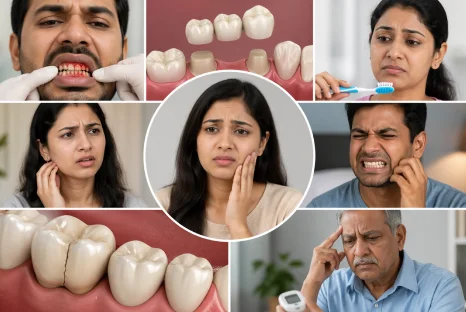
- Those with severe gum disease may face complications with bonding
- Insufficient healthy tooth structure makes crowns or bridges ineffective
- Poor oral hygiene can lead to decay and failure of restorations
- Allergies to materials like metals or ceramics may be problematic
- Teeth grinding or clenching can damage crowns or bridges
- Uncontrolled health conditions may affect healing and longevity
Timeline of Crowns & Bridges Procedure
- Consultation (10–15 minutes): Dentist evaluates oral health, discusses options, and checks suitability for crowns or bridges
- Impression and Design (1–2 hours) : Molds of teeth are taken, and custom crowns or bridges are designed
- Temporary Restoration (1–2 weeks): A temporary crown or bridge is placed while the permanent restoration is made
- Fitting (30–60 minutes): The permanent crown or bridge is placed, adjusted for fit, and bonded to the teeth
- Follow-up (30 minutes) : Final adjustments are made to ensure comfort and function
- Ongoing Adjustments (as needed): Additional visits may be required for fine-tuning and long-term comfort
How Long Do Crowns & Bridges Last
Crowns and bridges can last between 10 and 15 years with proper care. Their longevity depends on factors such as oral hygiene, the material used, and lifestyle habits.
- Porcelain and zirconia tend to last longer than resin-based crowns or bridges
- Regular brushing, flossing, and dental check-ups can extend their lifespan
- Avoiding teeth grinding, chewing hard foods, and excessive alcohol consumption helps prevent damage
- Crowns and bridges on back teeth tend to wear out faster due to heavy biting forces
- Conditions like bruxism or gum disease may shorten their lifespan
After-Care Tips for Long-Lasting Results
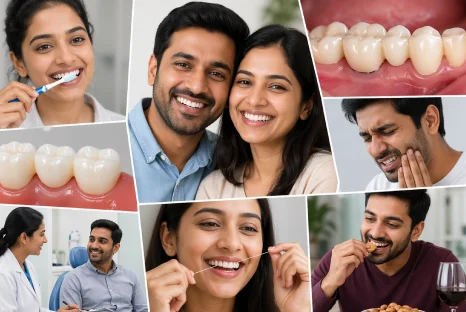
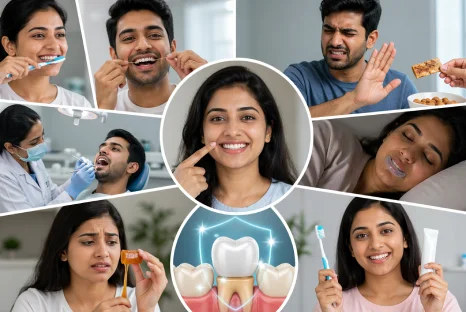
- Brush and floss daily, especially around the crown or bridge
- Avoid chewing hard foods or objects
- Visit your dentist regularly for check-ups
- Wear a night guard if you grind your teeth
- Be cautious with sticky or chewy foods
- Use fluoride toothpaste to protect surrounding teeth


Frequently Asked Questions
What happens if your crown feels loose or comes off?
If your crown becomes loose or falls off, it's important to visit your dentist right away to avoid tooth damage and discomfort.
Why does your crown hurt when you bite down?
Pain while biting could indicate that the crown doesn't fit properly, or there may be underlying tooth decay or gum issues.
Can a bridge fix your shifting teeth from a missing tooth?
Yes, a bridge can fill the gap, preventing adjacent teeth from shifting and helping to maintain proper alignment.
Can a crown or bridge help if your teeth are worn down from grinding?
Yes, crowns and bridges can restore teeth worn down by grinding, providing both function and protection.
Why does your crown look darker near the gum line?
A dark line near the gum line may be due to metal in the crown. If aesthetic concerns arise, talk to your dentist about alternatives like porcelain crowns.