

Dental Braces in Kolkata
Home > Treatments > Orthodontics > Dental Braces

26
Years of Excellence

NABH
Accredited

60+
Dental Professionals

12K+
Happy Patients

50+
Dental Treatments
Orthodontics
Dental Braces
Invisible Dental Braces
Growth Modulation
6292109993
What are Dental Braces?
Dental braces are orthodontic devices used to straighten misaligned teeth and correct bite issues. They apply gentle, consistent pressure over time to move teeth into their ideal position. Braces not only improve your smile but also enhance oral health by making teeth easier to clean.
Don’t let misaligned teeth hold you back—Smile & Profile Dental Clinic helps you achieve a confident, healthier smile. Schedule a consultation today.
Our Clinic Locations
How do Dental Braces Work?
Dental braces work by applying continuous, gentle pressure on the teeth, gradually shifting them into proper alignment over time. This controlled movement helps correct bite issues and improves overall dental structure for a healthier, more balanced smile.
- Brackets are fixed onto each tooth to act as anchors for movement
- An archwire connects the brackets and applies gentle pressure
- Periodic adjustments tighten the wire to guide teeth into position
- Elastic bands may be used to correct bite alignment
- Bone gradually reshapes to support the new position of the teeth
Types of Dental Braces
Metal Braces (Traditional Braces)
- Most common and cost-effective option
- Made of high-grade stainless steel
- Highly effective for complex alignment issues
- Visible but now smaller and more comfortable
Ceramic Braces
- Tooth-coloured or clear brackets for a less noticeable look
- Blend well with natural teeth
- Slightly more fragile than metal braces
- Popular among teens and adults
Lingual Braces
- Placed on the inner (back) side of the teeth
- Completely hidden from view
- Custom-made for each patient
- May take time to adjust while speaking or eating
Self-Ligating Braces
- Use clips instead of elastic bands to hold the wire
- Require fewer dental visits
- Easier to clean and maintain
- Can be metal or ceramic
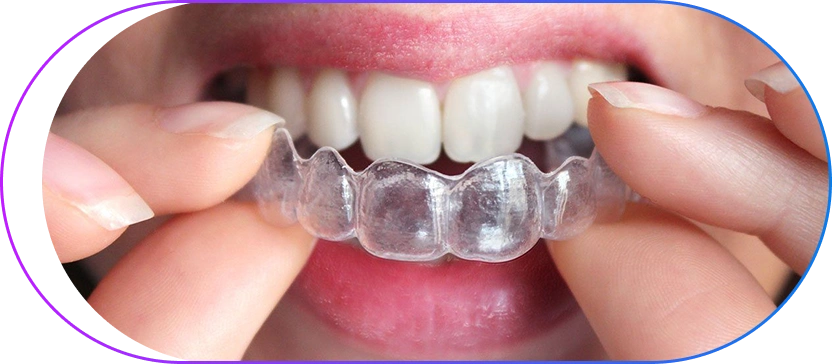
Clear Aligners (Invisalign-type)
- Removable, transparent trays
- Nearly invisible and comfortable
- Easy to eat and maintain oral hygiene
- Best suited for mild to moderate alignment issues
Self-Ligating Braces
- Use clips instead of elastic bands to hold the wire
- Require fewer dental visits
- Easier to clean and maintain
- Can be metal or ceramic
Who Should Consider Dental Braces?
- Individuals with crooked, crowded, or overlapping teeth
- People experiencing gaps between teeth
- Those with bite issues like overbite, underbite, or crossbite
- Anyone facing difficulty in chewing or speaking due to misalignment
- Individuals struggling to maintain oral hygiene due to uneven teeth
- Teens or adults looking to improve their smile and confidence
- Patients advised by a dentist or orthodontist for corrective treatment
Comparison Between Different Types of Dental Braces
| Type of Braces | Visibility | Comfort Level | Treatment Time | Maintenance | Best For |
|---|---|---|---|---|---|
| Metal Braces | Highly visible | Moderate | 18–24 months | Moderate care | Complex alignment & bite issues |
| Ceramic Braces | Less visible | Moderate | 18–24 months | Requires care (can stain) | Teens & adults wanting a subtle look |
| Lingual Braces | Invisible | Slightly uncomfortable initially | 18–24 months | Difficult to clean | Patients wanting completely hidden braces |
| Self-Ligating Braces | Visible / Semi-visible | More comfortable than traditional | 12–18 months | Easier than metal braces | Faster treatment with fewer visits |
| Clear Aligners | Almost invisible | Very comfortable | 6–18 months | Easy (removable) | Mild to moderate alignment issues |
Who Should Avoid Dental Braces?
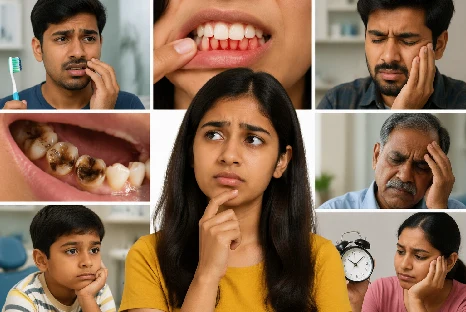
- Individuals with poor oral hygiene or untreated gum disease
- Patients with severe tooth decay or multiple untreated cavities
- People with insufficient bone support around teeth
- Individuals who are unlikely to follow regular dental visits or care instructions
- Patients with certain uncontrolled medical conditions affecting healing
- Very young children whose permanent teeth have not fully erupted
- Those looking for instant results (braces require time and consistency)
Timeline of Dental Braces
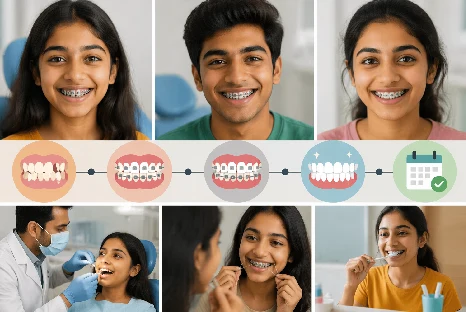
- Initial Consultation (Week 0) - Teeth examination, X-rays, and treatment planning by the orthodontist
- Braces Placement (Week 1–2) - Brackets and wires are fixed; mild discomfort may start
- Adjustment Phase (Every 4–6 Weeks) - Regular tightening and monitoring to guide tooth movement
- Visible Alignment Changes (3–6 Months) - Teeth begin to shift noticeably into better positions
- Major Correction Phase (6–18 Months) - Bite issues and alignment are significantly improved
- Final Alignment & Finishing (18–24 Months) - Fine adjustments for perfect positioning
- Braces Removal & Retainers (Post-Treatment) - Braces are removed, and retainers are given to maintain results
How Long Do Dental Braces Last
Dental braces typically last 12 to 24 months, depending on the complexity of the case and patient compliance.
- Mild alignment issues may be corrected within 6–12 months
- Moderate cases usually take around 12–18 months
- Complex bite or severe misalignment can take 18–24+ months
- Regular adjustments and follow-ups impact the overall duration
- Proper oral hygiene and wearing elastics as advised can speed up results
- Skipping appointments or poor care can delay treatment progress

After-Care Tips for Long-Lasting Results
- Wear your retainers as prescribed to prevent the teeth from shifting back
- Maintain proper oral hygiene with regular brushing and flossing
- Avoid hard, sticky, or chewy foods that can damage alignment
- Attend follow-up dental visits for monitoring and adjustments
- Use a soft-bristled toothbrush and orthodontic-friendly products
- Address any discomfort or issues immediately with your dentist
- Stay consistent with care routines to maintain your new smile
- Limit sugary foods and drinks to prevent decay around teeth


Frequently Asked Questions
Which type of braces is best for adults?
Clear aligners and ceramic braces are popular among adults due to their discreet appearance. The best choice depends on your dental condition and lifestyle preferences.
How long does it take to get used to braces?
Most patients adjust to braces within one to two weeks after placement. Initial discomfort reduces as your mouth adapts to the brackets and wires.
Is tooth extraction necessary for braces?
Tooth extraction may be required in cases of severe crowding. The orthodontist will decide based on space and alignment needs.
Do braces affect speech?
Some patients may notice slight speech changes initially after getting braces. This usually improves quickly as the mouth adjusts.
Are clear aligners better than braces?
Clear aligners are more comfortable and nearly invisible compared to braces. However, braces are often more effective for complex dental corrections.