

Dentures in Kolkata
Home > Treatments > Prosthodontics > Dentures

26
Years of Excellence

NABH
Accredited

60+
Dental Professionals

12K+
Happy Patients

50+
Dental Treatments
Prosthodontics
Dentures
Crowns & Bridges
Flexible Dentures
Full Mouth Reconstruction
6292109993
What are Dentures?
Dentures are removable dental appliances designed to replace missing teeth. They’re custom-made to fit your mouth and restore the function and appearance of your smile. Dentures can be full or partial, depending on how many teeth need replacing.
Let’s take the next step to a fuller smile. At Smile & Profile Dental Clinic, we offer top-notch denture solutions for you. Call us today to schedule your consultation.
Our Clinic Locations
Got Missing Teeth? Find Out If Dentures Are Right for You with Our Quick Quiz
How do Dentures Work?
Dentures work by fitting snugly over your gums, replacing missing teeth with custom-made prosthetics. They help restore your ability to eat, speak, and smile confidently.
- They are custom-made to fit the shape of your gums and mouth
- They improve your ability to chew and speak clearly
- Designed to look like real teeth, they blend seamlessly with your smile
- Dentures are removable, making them easy to take out and clean
- They are crafted to fit securely and comfortably over your gums
Types of Dentures
Complete Dentures
- Used when all teeth in a jaw are missing.
- Restores both the function and appearance of your smile.
- Custom-made to fit over the gums, ensuring a comfortable fit.
- Typically made from acrylic or a combination of acrylic and porcelain for a natural look.
Partial Dentures
- Ideal when some natural teeth remain in the mouth.
- Fills gaps by attaching to the remaining natural teeth with metal clasps or precision attachments.
- Helps prevent the remaining natural teeth from shifting.
- Can be removable for easy cleaning or fixed for a more permanent solution.
Immediate Dentures
- Placed immediately after teeth are extracted, offering instant tooth replacement.
- Can help protect the gums during healing and provide a temporary aesthetic solution.
- Usually requires adjustments after the healing process as the gums shrink.
- Often used as a transitional option until permanent dentures are ready.
Implant-Supported Dentures
- Secured in place by dental implants, offering a more stable fit.
- Ideal for patients with a strong jawbone and healthy oral health.
- Reduces the risk of bone loss by stimulating the jawbone similar to natural teeth.
- Provides improved comfort and functionality compared to traditional dentures.
Overdentures
- Fitted over remaining natural teeth or dental implants for added stability.
- Helps preserve the remaining natural teeth and reduces the risk of bone loss.
- Offers a more comfortable and secure fit than conventional dentures.
- Can be either removable or fixed, depending on the patient’s needs.
Conventional Biopsy
- Small tissue sample is removed from suspicious area
- Examined under a microscope for confirmation
- Considered the gold standard for diagnosis
- Done when other screenings show abnormal findings
Dentures vs Dental Implants
 Dentures
 Dental Implants
| Feature | Dentures | Dental Implants |
|---|---|---|
| Appearance | Custom-made to resemble natural teeth | Designed to look and function like natural teeth |
| Comfort | May feel bulky or uncomfortable at first | Offers a more natural feel, fixed in place |
| Durability | Lasts around 5-7 years with proper care | Can last a lifetime with proper maintenance |
| Functionality | May have slight movement, affecting chewing | Functions like natural teeth, no shifting |
| Maintenance | Requires removal for cleaning, easy to maintain | Requires regular brushing and flossing |
| Bone Preservation | Does not prevent bone loss | Stimulates the jawbone, preventing bone loss |
| Procedure | Non-invasive, quicker to get | Surgical procedure to place the implant |
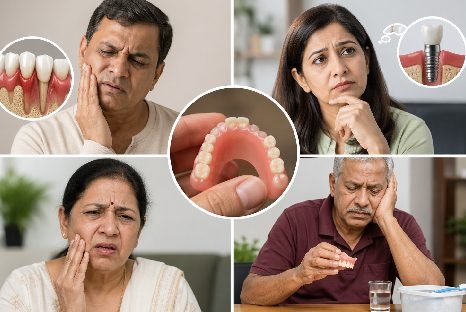
Who Should Avoid Dentures?
- People with severe gum disease or insufficient bone support
- Those seeking a permanent solution instead of a removable option
- Individuals who experience frequent irritation or discomfort
- People unable to commit to regular maintenance and cleaning
Timeline of Dentures Treatment
- Consultation (10–15 minutes) : Dentist evaluates oral health and denture suitability
- Impression and Design (1–2 hours) : Denture molds are taken, and custom dentures are designed
- Fitting (30–60 minutes) : Dentures are fitted and adjusted for comfort
- Follow-up (30 minutes) : Final adjustments are made to ensure proper fit and function
- Ongoing Adjustments (as needed) : Additional visits for fine-tuning and comfort after use
How Long Do Dentures Last
Dentures typically last between 5 and 10 years with proper care, after which they may need to be replaced due to wear or changes in your mouth.
- Regular cleaning and maintenance can extend their lifespan.
- Dentures may need adjustments over time due to changes in gum shape.
- Wear and tear can cause denture material to degrade, requiring replacement.
- Proper fit ensures comfort and helps prevent oral health issues.
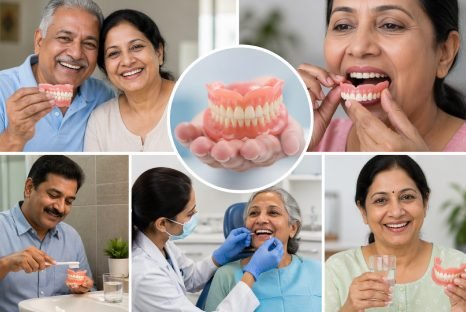
After-Care Tips for Long-Lasting Results
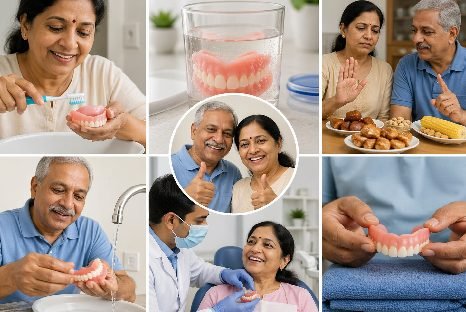
- Clean dentures daily with a soft brush and non-abrasive cleaner
- Soak dentures overnight in a cleaning solution to prevent drying out
- Avoid sticky, hard, or tough foods that can damage the dentures
- Rinse dentures after eating to remove food particles and prevent buildup
- Regularly visit your dentist for check-ups and adjustments
- Handle dentures carefully to avoid cracking or breaking


Frequently Asked Questions
How to know if your remaining teeth are causing problems that require dentures?
If your remaining teeth are loose, decayed beyond repair, or causing pain, dentures can provide a stable solution to restore oral health and comfort.
How can you tell if your jawbone has deteriorated due to missing teeth?
Jawbone loss is common after tooth loss. Symptoms might include a change in the shape of your face or ill-fitting dentures. A dentist can evaluate your jaw and recommend the best treatment options.
When should you consider getting dentures instead of other dental treatments?
If your remaining teeth cannot be saved or restored through fillings, crowns, or root canals, dentures might be the ideal option for replacing multiple missing teeth.
Can you still speak clearly with dentures?
It may take some time to get used to speaking with dentures, but with practice, most people regain clear speech. If you experience persistent issues, your dentist may adjust the fit.
How will you know if your dentures fit properly?
If your dentures cause discomfort, sores, or difficulty chewing, they might not fit properly. You should visit your dentist for adjustments to ensure they fit securely and comfortably.