

Soft Tissue Grafting in Kolkata
Home > Treatments > Periodontics> Soft Tissue Grafting

26
Years of Excellence

NABH
Accredited

60+
Dental Professionals

12K+
Happy Patients

50+
Dental Treatments
Periodontics
Soft Tissue Grafting
Flap Surgery
6292109993
What is Soft Tissue Grafting?
Soft tissue grafting is a dental procedure used to restore receding gums and protect exposed tooth roots. It helps reduce sensitivity, improve gum health, and enhance your smile by rebuilding natural gum tissue where it’s been lost.
If you’re noticing gum recession or sensitivity, it’s time to fix it before it gets worse. Get expert care at Smile & Profile Dental Clinic. Book your consultation today.
Our Clinic Locations
Are Your Gums Trying to Tell You Something? Find Out if Soft Tissue Grafting Can Help—Take the Quiz
How does Soft Tissue Grafting Work?
A small piece of healthy tissue is placed over areas where gums have receded to cover exposed roots and rebuild lost gum support. Over time, it blends naturally with your existing gums, reducing sensitivity and protecting your teeth from further damage.
- Uses tissue from your palate or a donor source
- Done under local anaesthesia for comfort
- Secured carefully over the affected area
- Promotes natural healing and tissue integration
- Helps strengthen the gum line over time
- Improves overall gum stability and aesthetics
Types of Soft Tissue Grafting
Connective Tissue Graft
- Most commonly used technique
- Tissue taken from beneath the palate
- Placed over exposed roots
- Offers a natural look and strong root coverage
- Ideal for moderate to severe gum recession
Free Gingival Graft
- Tissue taken directly from the roof of the mouth
- Focuses on thickening thin gums
- Helps prevent further recession
- Commonly used in areas with minimal gum tissue
- Slightly firmer appearance after healing
Pedicle (Lateral) Graft
- Uses tissue from nearby healthy gums
- No separate donor site needed
- Maintains original blood supply
- Faster healing compared to other types
- Suitable when enough gum tissue is present
Allograft (Donor Tissue Graft)
- Uses processed donor tissue
- No need for tissue removal from the patient
- Reduces surgical discomfort
- Shorter procedure time
- Effective for multiple areas
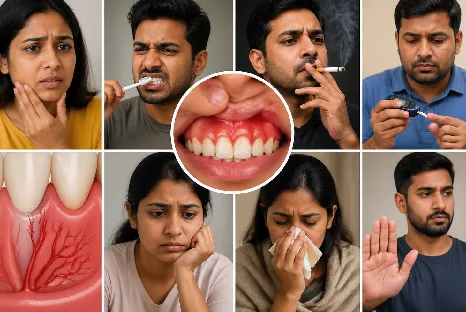
Who Should Avoid Soft Tissue Grafting?
- Active gum infection or untreated periodontal disease
- Poor oral hygiene habits that can affect healing
- Heavy smokers or tobacco users
- Uncontrolled diabetes or systemic health issues
- Insufficient blood supply in the affected gum area
- Patients with compromised immunity or slow-healing conditions
- Those not ready to follow post-procedure care properly
Timeline of Soft Tissue Grafting
- Consultation (10–15 minutes): The dentist evaluates gum recession, checks sensitivity, and determines if soft tissue grafting is suitable.
- Imaging and Examination (15–30 minutes): X-rays and gum assessment help understand root exposure and overall gum health.
- Preparation (20–30 minutes) : Local anaesthesia is given, and the donor/recipient site is prepared for a comfortable procedure.
- Grafting Procedure (45–90 minutes) : Tissue is taken (from palate or donor source) and placed over the affected area, then secured with sutures.
- Initial Healing (1–2 weeks): The graft begins to integrate, sensitivity reduces, and stitches may be removed if needed.
- Follow-up (15–30 minutes): The dentist checks healing progress and ensures proper tissue attachment.
- Ongoing Maintenance (as needed): Regular check-ups and good oral care help maintain gum health and long-term results.
How Long Do Soft Tissue Grafting Results Last
Soft tissue grafting results can last many years to a lifetime—especially when supported with good oral hygiene and regular dental care. In most cases, once the graft heals properly, it remains stable long-term.
- Consistent brushing and flossing help maintain results
- Regular dental check-ups prevent further gum recession
- Avoiding smoking improves long-term success
- Managing teeth grinding or clenching protects the graft
- A healthy diet supports gum tissue strength
- Early treatment gives better and longer-lasting outcomes


After-Care Tips for Long-Lasting Results
- Avoid brushing the grafted area for a few days as advised
- Stick to soft foods to prevent irritation
- Rinse gently with the prescribed mouthwash
- Do not smoke or use tobacco
- Avoid touching or disturbing the graft site
- Take medications exactly as prescribed
- Maintain overall oral hygiene carefully
- Attend all follow-up appointments for proper healing


Frequently Asked Questions
Do soft tissue grafts look natural after healing?
Yes, once healed, the graft blends with your existing gums and looks completely natural.
Is soft tissue grafting worth it?
Yes, it helps protect exposed roots, reduce sensitivity, and prevent further gum damage, making it a long-term investment in oral health.
Can gum recession come back after grafting?
It can, but the risk is low if you maintain proper oral care and avoid habits like aggressive brushing or smoking.
Can soft tissue grafting fix receding gums permanently?
It can effectively cover exposed roots and improve gum health long-term, but maintaining results depends on daily oral care and habits.
What happens if gum recession is not treated?
It can lead to tooth sensitivity, root decay, and even tooth loss in severe cases.