
Understand which reactions after teeth whitening are temporary and expected — and which symptoms may need professional attention. Learn how sensitivity, gum irritation, and recovery timelines differ between normal healing and warning signs.
Are Side Effects After Teeth Whitening Normal?
Teeth whitening is a safe cosmetic dental procedure when performed correctly. But, yes, temporary side effects like tooth sensitivity and mild gum irritation are common.
These usually last between 24 to 72 hours, although in some cases sensitivity may extend for a few days depending on enamel condition and treatment type.
If you’re experiencing ongoing sensitivity or planning teeth whitening, a proper dental evaluation is essential before proceeding.
Smile & Profile, a dental treatment centre in Kolkata, offers dental whitening that is guided by enamel condition, sensitivity risk, and customised protocols to ensure safe, predictable results.
Visit today or enquire about our teeth whitening solutions in Kolkata.
How Teeth Whitening Works
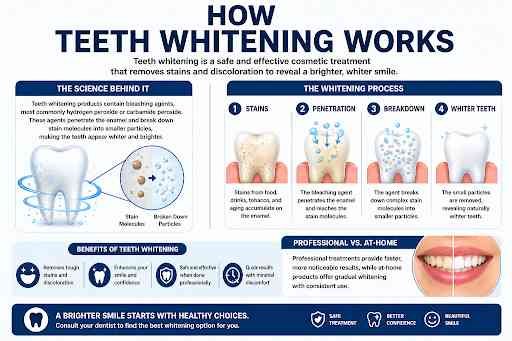
Teeth whitening is a controlled chemical process. Bleaching agents like hydrogen peroxide release reactive oxygen molecules that penetrate enamel and break down stain compounds. This alters how light reflects off the tooth surface, making teeth appear whiter.
What This Means for Your Teeth
- Enamel permeability temporarily increases
- Microscopic channels allow deeper penetration
- External triggers can reach nerve endings more easily
This is a temporary physiological response, not structural damage.
Clinical Data: How Common Are Teeth Whitening Side Effects?
Clinical evidence shows:
- Roughly 50% to over 60% of patients experience sensitivity during whitening (source)
- About 77% of people who get tooth sensitivity during or after a two-week whitening treatment feel better within three days or less. [source]
- Some people may have moderate sensitivity after teeth whitening that can last up to 1–2 weeks, but this is less common.
Table: Prevalence of Sensitivity After Teeth Whitening
| Finding | Clinical Insight |
| Sensitivity occurrence | Common |
| Typical duration | 24–72 hours |
| Extended sensitivity | Less common |
In-office whitening works fast, often in 1–2 visits, but 18–78% of people feel sensitivity during treatment. It usually settles once the procedure is done. (source)
If you feel something, you are within expected outcomes.
Clinical Severity of Teeth Whitening Sensitivity: Mild, Moderate, Severe
Not all sensitivity presents the same way. Clinical classification helps define what is expected and what requires attention.
Table: Clinical Classification of Teeth Sensitivity
| Severity Level | Clinical Presentation | Typical Duration |
| Mild | Brief response to cold or air | < 72 hours |
| Moderate | Discomfort while eating or drinking | 2–5 days |
| Severe | Persistent or throbbing pain | Up to 1–2 weeks |
Most patients experience mild to moderate symptoms that resolve without intervention.
Types of Side Effects After Teeth Whitening
Understanding the full range helps differentiate normal reactions from concerning signs.
Common and Expected Reactions
- Sensitivity to cold air or drinks
- Short, sharp nerve responses
- Mild gum irritation
- Temporary eating discomfort
Less Common but Still Normal
- Sensitivity to sweet or acidic foods
- Uneven sensitivity across teeth
- Mild surface dryness sensation
Rare but Possible Reactions
- Sensitivity lasting beyond a week
- Increasing discomfort over time
- Noticeable enamel dullness
The key factor is progression. Improvement indicates normal recovery.
Recovery Timeline: How Long Do Teeth Whitening Side Effects Last
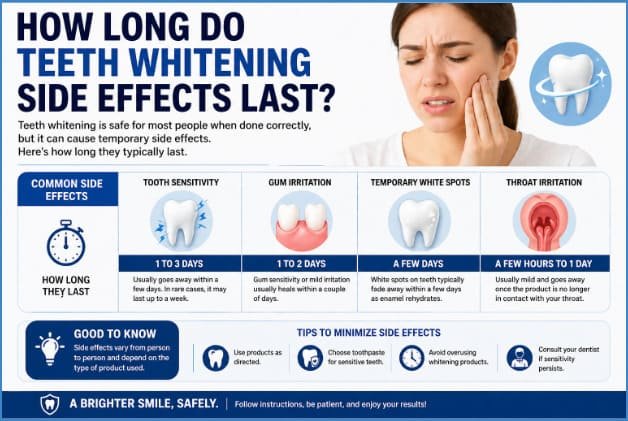
| Timeframe | What Typically Happens |
| 0–24 hours | Peak sensitivity |
| 24–72 hours | Rapid improvement |
| Day 3–5 | Near-normal comfort |
| Day 7+ | Requires evaluation |
Most reactions resolve within the first three days.
Why Teeth Become Sensitive After Whitening
Sensitivity occurs due to temporary changes in enamel and dentin interaction.
Mechanism of Teeth Sensitivity
- Dentinal tubules become more exposed
- Enamel allows deeper stimulus transmission
- Nerve endings respond more rapidly
Resulting Sensations
- Sharp response to temperature
- Brief nerve discomfort
- Increased sensitivity to air
As enamel rehydrates and stabilises, sensitivity reduces naturally.
Is Sensitivity Post-Teeth Whitening Reversible or Permanent?
Whitening sensitivity is a temporary inflammatory response, not permanent damage.
Clinical Explanation
- Peroxide reaches dentin layers
- Triggers a reversible nerve response
- No long-term structural harm in controlled procedures
Takeaway
Sensitivity after teeth whitening is reversible and self-limiting in healthy teeth.
Risk Factors: Who Is More Likely to Experience Teeth Whitening Side Effects?
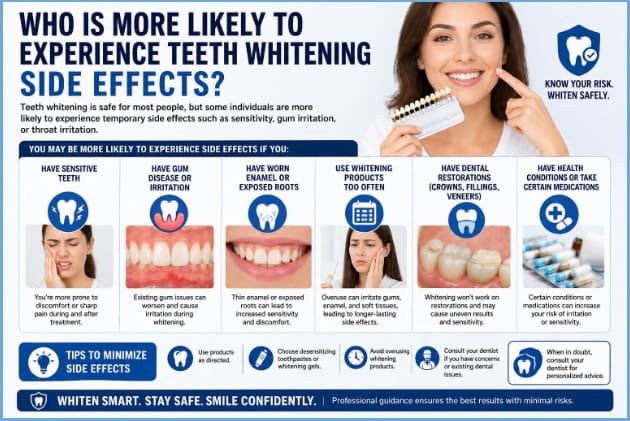
Not all individuals respond the same way.
High-Risk Profiles
- Pre-existing sensitivity
- Thin or worn enamel
- Gum recession
- Untreated cavities
- Frequent whitening history
Teeth whitening should be customised based on a baseline oral condition.
Contraindications: When Teeth Whitening Should Be Delayed
Teeth whitening should not be performed without proper evaluation in certain conditions.
Avoid or Delay If You Have:
- Active gum disease
- Untreated dental decay
- Enamel erosion
- Cracked teeth
- Severe sensitivity
These conditions increase the risk of prolonged discomfort and complications.
Does the Teeth Whitening Method Affect Side Effects?
Yes. The method directly influences sensitivity levels.
Key Factors
- Peroxide concentration
- Exposure duration
- Application precision
- Frequency of sessions
Table: Sensitivity Risk by Teeth Whitening Method
| Method | Sensitivity Risk | Duration |
| In-office whitening | Higher | Short-term |
| Custom trays | Moderate | Gradual |
| OTC products | Variable | Mild to inconsistent |
Protocol selection plays a major role in patient comfort.
Decision Guide: Should You Proceed with Teeth Whitening?
Clear evaluation is essential.
Suitable Candidates
- Healthy enamel
- No untreated dental issues
- Mild to moderate staining
Delay Treatment If
- Sensitivity is already present
- Gums are inflamed
- Recent whitening was performed
Avoid Temporarily If
- Active dental disease exists
- Structural tooth issues are present
At-Home vs Professional Teeth Whitening: Safety and Outcome Differences
Table: Comparison of Teeth Whitening Approaches
| Factor | At-Home teeth Whitening | Professional Teeth Whitening |
| Application control | Low | High |
| Sensitivity risk | Higher | Managed |
| Results | Variable | Predictable |
| Safety | Depends on use | Clinically controlled |
Professional teeth whitening treatments provide greater control over exposure and outcomes.
Evidence-Based Methods Used to Reduce Teeth Whitening Sensitivity
Clinical Interventions
- Potassium nitrate to reduce nerve response
- Fluoride for remineralisation
- Calcium-based compounds to seal dentinal tubules
- Pre-treatment desensitising agents
These methods significantly reduce post-treatment discomfort.
How to Reduce Sensitivity After Teeth Whitening
Before Treatment
- Address dental issues
- Use desensitising toothpaste
Immediately After
- Avoid extreme temperatures
- Limit acidic foods
- Stay hydrated
Long-Term Care
- Space whitening sessions
- Avoid overuse
Warning Signs: When Teeth Whitening Side Effects Are Not Normal
Red Flags
- Pain lasting more than 7 days
- Increasing sensitivity
- Difficulty eating
- Visible enamel changes
These require professional evaluation.
Myth vs Reality: Understanding Teeth Whitening Side Effects
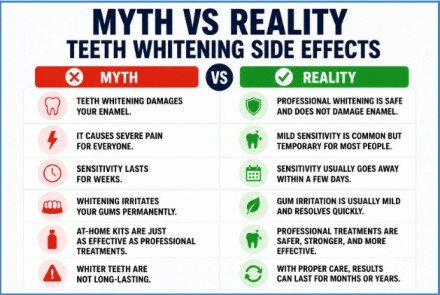
Table: Myths vs Clinical Facts
| Myth | Reality |
| Sensitivity means damage | It is temporary |
| Whitening weakens teeth | Only misuse causes harm |
| Pain is always harmful | Short-term discomfort is normal |
| Gum irritation is serious | Usually mild and temporary |
Teeth Whitening in Kolkata: Choosing the Right Approach
Treatment outcomes depend heavily on the right approach.
What Defines Safe Teeth Whitening in Kolkata
- Pre-treatment assessment
- Controlled application
- Post-treatment monitoring
Variations in technique and supervision directly affect both results and side effects.
Next Step: Make an Informed Decision
If you are considering teeth whitening in Kolkata, focus on:
- Proper dental evaluation
- Understanding your sensitivity risk
- Choosing a controlled and personalised treatment
Experiencing Post-Teeth Whitening Symptoms? Get It Checked Now
If your sensitivity is worsening or lasting longer than expected, it’s not something to ignore. Early evaluation helps prevent complications.
Book an appointment at Smile & Profile today.
People Also Ask
Can teeth whitening affect crowns, veneers, or fillings?
Yes. Whitening treatments mainly work on natural teeth and may not change the colour of crowns, veneers, or existing dental fillings, which can sometimes create uneven shade matching.
Can smoking or tobacco use worsen teeth whitening results?
Yes. Smoking and tobacco products can quickly stain teeth again after whitening and may also irritate sensitive gums during recovery.
Why are some tooth stains more difficult to whiten?
Certain stains caused by ageing, medications, trauma, or internal tooth changes sit deeper within the tooth structure and may respond less effectively to standard whitening treatments.
Can whitening toothpaste increase tooth sensitivity after whitening?
Yes. Some abrasive or highly active whitening toothpastes may temporarily increase sensitivity if used immediately after a whitening procedure.
Can acidic foods make post-whitening discomfort feel worse?
Yes. Acidic foods and beverages may temporarily irritate teeth that are already sensitive after whitening treatment.
Why do dentists ask about previous whitening treatments before starting again?
Frequent whitening within short intervals may increase the risk of enamel irritation and prolonged sensitivity, which is why treatment timing matters.
Can whitening strips cause gum irritation if applied incorrectly?
Yes. Whitening strips or gels that touch the gums for prolonged periods may cause temporary irritation or burning sensations in soft tissues.