
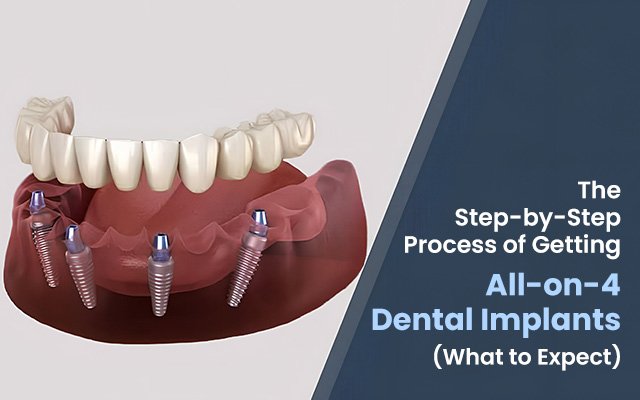
Imagine enjoying your favourite food again without fear of loose teeth. Imagine smiling confidently without worrying about dentures slipping. If these minor stresses have been holding you back, consider upgrading to all-on-4 dental implants.
All-on-4 dental implants are making waves. And they are easily available in Kolkata, too.
You get a full set of fixed teeth using only four implants — often on the very same day. It looks natural. Feels steady. It restores confidence lost due to damaged or missing teeth.
Here’s a simple, friendly walk-through of how the treatment works. And what you can expect at each step.
Understanding All-on-4 Dental Implants
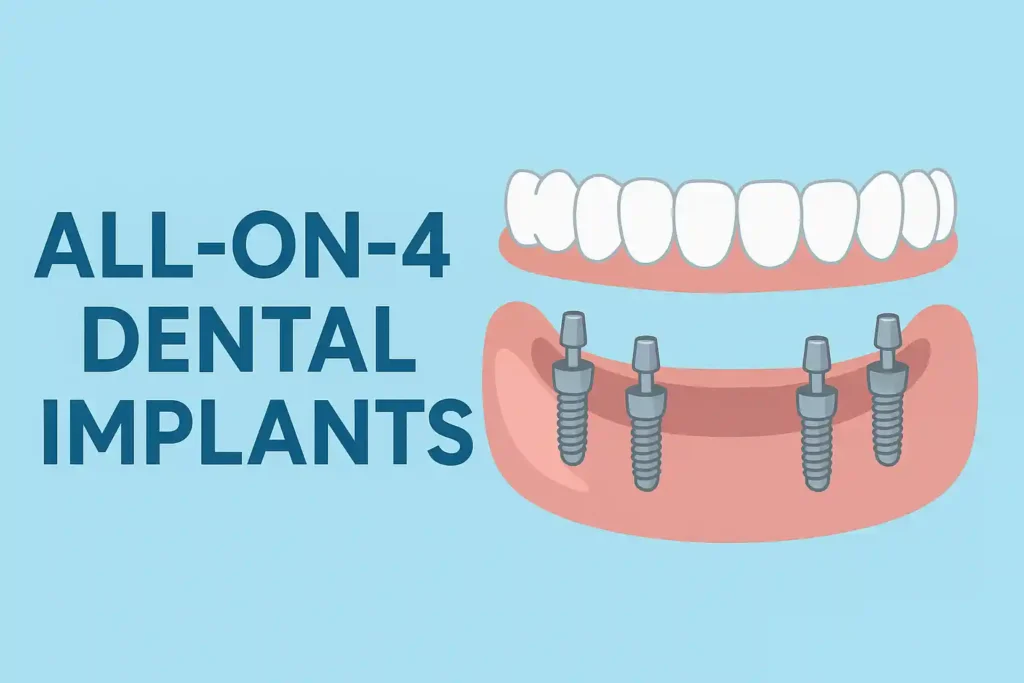
All-on-4 is a form of full-arch dental implants. Four strategically placed implants support a full set of upper or lower teeth.
Furthermore, All-on-4 dental implants are recommended for patients
- With extensive tooth loss.
- Or with significant bone loss needing a full-arch restoration.
They offer a permanent, stable solution, especially for those who cannot undergo traditional implants due to insufficient bone.
What Makes All-on-4 Unique
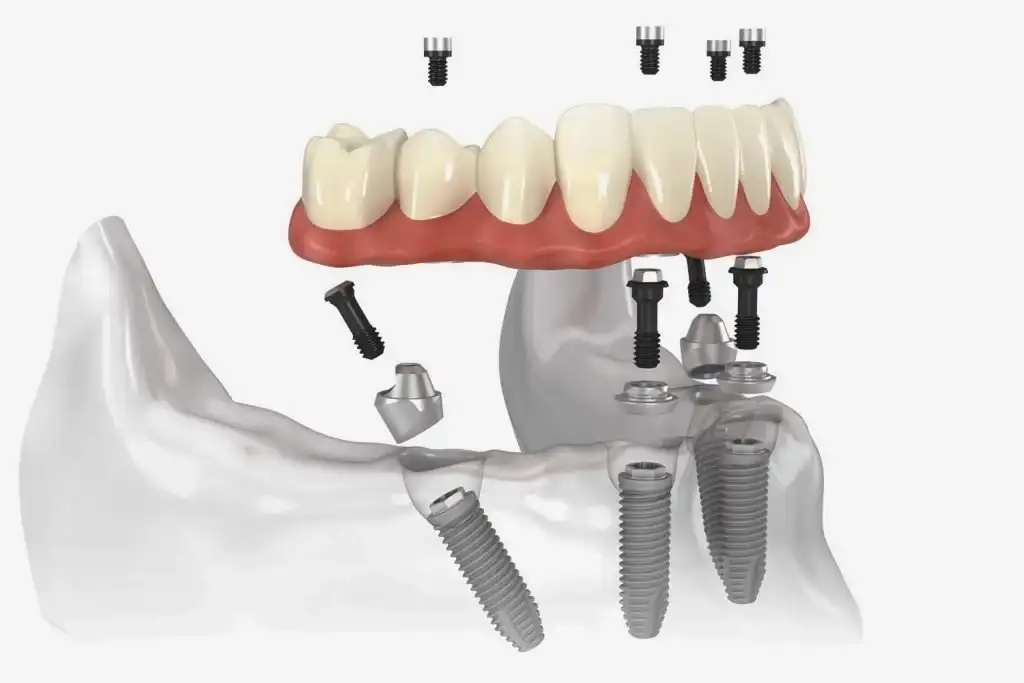
- Only four implants support the entire arch.
- The back implants are placed at an angle to utilise available bone and often avoid the need for bone grafting.
- A temporary fixed bridge is usually fitted on the same day, so you don’t walk out toothless.
- It’s a scientifically backed concept used worldwide.
Benefits Over Traditional Dentures
Traditional dentures rest on the gums and can move. All-on-4 is a fixed solution that allows you to speak, chew, and smile with greater confidence. It also helps preserve the jawbone, which dentures can’t do. NIH-backed implant data show implants help maintain bone better than conventional prostheses.
Here’s a quick comparison:
| Feature | Traditional Denture | All-on-4 |
| Stability | Can loosen | Fixed to implants |
| Bone support | No | Yes |
| Chewing power | Limited | Much better |
| Looks/Confidence | Can look artificial | Natural-looking full arch |
| Maintenance | Remove and clean | Brush like teeth |
Oral Examination and Imaging
The doctor will check your gums, bite, and any remaining teeth. Then, a CBCT scan or digital X-ray is taken to see the bone volume and nerve positions. This 3D scan is what helps the implantologist plan your implant positions safely and accurately. Digital workflows for full-arch cases are now very common.
Customised Treatment Plan
After imaging, we build your personalised plan. We decide:
- Which arch (upper, lower or both) to treat first
- Whether any teeth need extraction
- Whether you qualify for same-day teeth or need healing time
- What material will your final prosthesis use (acrylic, ceramic, hybrid)
We walk you through cost, timeline, steps and after-care. You leave the consultation knowing exactly what to expect.
Preparing for the Procedure
This part makes the surgery day smooth.
Pre-Surgery Guidelines
You may be asked to:
- Get basic blood tests
- Control blood sugar if diabetic.
- Stop smoking or reduce it.
- Take antibiotics if advised.
These steps help reduce the risk of infection and facilitate the healing process of the implants.
Health and Lifestyle Considerations
Because implants rely on your body’s healing ability (bone integrating with titanium), your overall health matters. Conditions like uncontrolled diabetes, heavy smoking, or unmanaged gum disease can jeopardise success. Studies of full-arch implants emphasise that patient lifestyle and health are risk factors.
We’ll review your health record, medications and habits to ensure your treatment is safe and predictable.
The All-on-4 Implant Procedure
Surgery day is the big day — but most patients say it’s easier than they imagined.
Placement of Implants
- Any non-saveable teeth are removed.
- The gums are opened slightly.
- Four titanium implants are placed — two straight in front, two tilted at the back.
This follows the well-documented All-on-4 protocol introduced by Maló and later supported by multi-year outcome studies.
Because only four implants are used, the surgery is shorter than placing 6–8 implants.
Fitting the Prosthesis
In many cases, a provisional (temporary) fixed bridge is attached the same day – this is often called “immediate loading”. You leave with teeth, not just implants.
After 3-4 months of healing (osseointegration), the final prosthesis is made and fitted. At that point, you’re using your full-arch dental implants for day-to-day life.
Multiple long-term studies have confirmed high survival rates for the All-on-4 concept when it is placed by experienced clinicians.
This step marks the beginning of your new smile.
Recovery and Aftercare
Healing is usually comfortable when you follow instructions.
Healing Timeline
- Day 1-2: You may feel mild swelling or soreness. Soft diet advised.
- Week 1-2: Gums start to heal around implants; you may feel comfortable socialising.
- Months 3-4: Bone begins to integrate firmly with implants; you may receive your final bridge.
A clinical study of All-on-4 showed 99.38 % implant survival at up to 4-year follow-up. So, you’ll want to follow the instructions carefully to achieve these outcomes.
Oral Hygiene and Diet Tips
- First few days: soft diet — dal, mashed veggies, soft rice.
- Avoid biting hard foods from the front.
- Clean gently around the bridge with a soft brush and implant floss.
Once your final teeth are in place, treat them as you would natural teeth. Brush your teeth twice daily. Floss regularly, and schedule regular dental check-ups.
This is post-implant care — it decides how long your investment lasts.
Long-Term Maintenance
All-on-4 is a long-term oral rehabilitation, but it still needs care.
Regular Checkups and Cleaning
Your fixed bridge is not a “set and forget” solution. You must come in every 6 months for professional cleaning, evaluation of implant stability, and checking for wear or loose parts.
Studies have shown that the long-term success of full-arch implant systems depends on proper maintenance and regular monitoring.
Ensuring Longevity of Your Implants
Here’s how to make your investment last:
- Quit smoking (or don’t resume)
- Keep diseases like diabetes or gum disease under control
- Avoid using your teeth as tools (such as opening bottles).
- If you notice clicking, an odd smell, movement or discomfort — call us promptly
With good care, your permanent dentures (fixed bridge on All-on-4 implants) can serve you for decades.
Life After All-on-4 Implants
Many patients say:
- They no longer pause mid-sentence to protect their denture.
- They can eat sweets and crunchy snacks, and chat freely during meetings.
- They find that their face looks younger — the gums and bone have kept their shape.
If you search all-on-4 dental implants in Kolkata, you’re not just looking for teeth — you’re looking for a restored life.
Take the step. Your smile, your comfort, and your confidence deserve it.
If you are facing the frustration of failing dentures, missing multiple teeth, or being told you don’t have enough bone. Don’t resign yourself to the status quo.
Book a dental implant consultation today
People Also Ask
Is All-on-4 implant procedure painful?
Most patients say no. You get local anaesthesia or sedation. Post-surgery discomfort is mild and can be controlled with medication.
How long does the All-on-4 surgery take?
Usually 2–4 hours per jaw, depending on extractions and bone quality.
Can I eat normally after All-on-4?
You start with soft foods. After the implants fuse with the bone and you receive the final bridge, your chewing improves significantly.
Is All-on-4 better than normal dentures?
Yes, for most full-mouth cases. It is fixed, supports bone, and looks more natural.Who is the right candidate for All-on-4?
People missing many teeth, those with failing bridges, or long-term denture wearers who want to replace their dentures with fixed teeth. A proper dental implant consultation confirms eligibility.