
Laser Dentistry in Kolkata
Home > Treatments > Laser Dentistry

26
Years of Excellence
NABH
Accredited
60+
Dental Professionals
12K+
Happy Patients
50+
Dental TreatmentsPeriodontics
Laser Dentistry in Kolkata
6292109993
What is Laser Dentistry?
Laser dentistry is a modern dental technique that uses focused light energy to treat gum and tooth problems with high precision. It reduces pain, bleeding, and recovery time compared to traditional methods. From gum treatments to cavity removal, it makes dental care quicker, cleaner, and more comfortable.
And if that sounds like the kind of stress-free smile upgrade you’ve been waiting for, it’s time to meet the experts who actually make it happen. Step into Smile & Profile Dental Clinic—where advanced laser care meets comfort, precision, and a reason to smile without hesitation.
Our Clinic Locations
Still Avoiding the Dentist? See If Laser Dentistry Can Change the Way You Experience Dental Treatment
Question 1 of 6
How does Laser Dentistry Work?
A focused laser beam gently targets and treats affected areas of your teeth or gums with high precision. It removes damaged tissue or bacteria while keeping the surrounding healthy areas untouched, making the procedure quicker and more comfortable.
- Minimises bleeding during treatment
- Reduces the need for sutures in many cases
- Lowers the risk of infection after the procedure
- Helps in faster tissue regeneration
- Often requires little to no anaesthesia
- Makes treatment more comfortable for anxious patients
Types of Laser Dentistry
Soft Tissue Lasers
- Used for treating gums and the surrounding soft tissues
- Helps in gum reshaping and contour correction
- Reduces bleeding and swelling during gum procedures
- Commonly used in gum disease treatment
Hard Tissue Lasers
- Used directly on teeth for cavity removal
- Helps in preparing teeth for fillings
- Minimises discomfort compared to drills
- Preserves more healthy tooth structure
Periodontal Lasers
- Targets deep gum pockets affected by infection
- Removes bacteria and infected tissue
- Supports gum reattachment to teeth
- Helps in managing advanced gum disease
Cosmetic Lasers
- Used for improving gum line symmetry
- Helps in creating a balanced smile appearance
- Reduces excess gum display (gummy smile)
- Enhances overall smile aesthetics
Endodontic Lasers
- Used during root canal disinfection
- Cleans internal tooth canals more effectively
- Helps reduce bacteria inside the tooth
- Improves the success rate of root canal treatment
Cosmetic Lasers
- Used for improving gum line symmetry
- Helps in creating a balanced smile appearance
- Reduces excess gum display (gummy smile)
- Enhances overall smile aesthetics
Who Should Avoid Laser Dentistry?
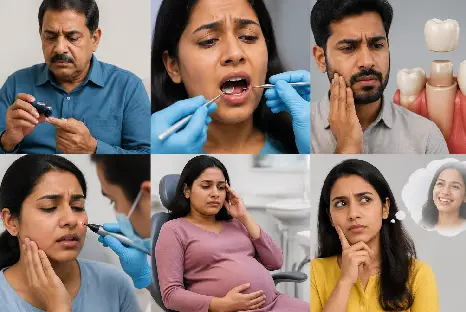
- Uncontrolled medical conditions like severe diabetes or bleeding issues
- Very deep decay needing conventional treatment
- Extensive dental restoration cases
- Tissues not suitable for laser use
- Certain pregnancy-related precautions
- Unrealistic expectations about instant results
Timeline of Laser Dentistry
- Consultation (10–15 minutes): The dentist assesses your dental issue, checks for symptoms such as decay, gum disease, or sensitivity, and determines whether laser dentistry is suitable.
- Imaging and Examination (15–30 minutes) : Digital scans or X-rays are taken to get a clear view of teeth, gums, and underlying structures.
- Preparation (10–20 minutes): The area is cleaned and isolated, and local anaesthesia is given if required for a pain-free experience.
- Laser Procedure (20–60 minutes) : A focused laser beam is used to precisely treat the affected area by removing decayed or infected tissue or reshaping the gums.
- Immediate Recovery (Same day) : Minimal bleeding or discomfort allows most patients to resume normal activities quickly.
- Healing Phase (3–7 days) : Mild sensitivity may occur, but healing is usually faster compared to traditional methods.
- Follow-up (15–30 minutes) : The dentist reviews healing progress and ensures the treated area is recovering properly.
How Long Do Laser Dentistry Results Last
Laser dentistry results typically last 3–5 years for soft-tissue treatments and 5–10+ years for hard-tissue or restorative procedures, depending on oral care habits.
- Longevity improves with consistent brushing and flossing
- Regular dental visits help maintain treatment outcomes
- Avoiding tobacco supports longer-lasting results
- Early intervention prevents the recurrence of issues
- Diet choices can influence gum and tooth health over time
- Follow-up care ensures the stability of treated areas

After-Care Tips for Long-Lasting Results
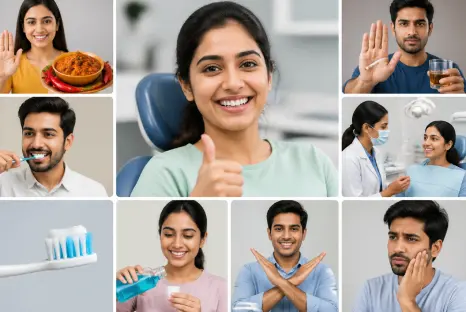
- Avoid very hot or spicy food for the first 24–48 hours
- Maintain gentle brushing around the treated area
- Use a soft-bristle toothbrush to prevent irritation
- Rinse with the prescribed mouthwash if advised
- Stay away from smoking and alcohol during healing
- Follow all scheduled dental check-ups
- Report any unusual pain or swelling early


Frequently Asked Questions
Is laser dentistry better than traditional dental treatment?
It depends on the case. Laser dentistry offers greater precision, greater comfort, and faster recovery, but not all dental conditions require it.
Are lasers used for cavity removal?
Yes, hard tissue lasers can remove tooth decay and, in many cases, prepare teeth for fillings without traditional drilling.
Can laser dentistry treat gum disease permanently?
It can effectively manage gum disease and reduce bacteria, but long-term success depends on oral hygiene and regular dental care.
Is laser dentistry suitable for children?
Yes, laser dentistry can be used for children in certain cases because it is less painful and reduces the fear of dental drills.
Can laser dentistry whiten teeth?
Yes, certain laser treatments are used in teeth whitening procedures to enhance results and speed up the process.